
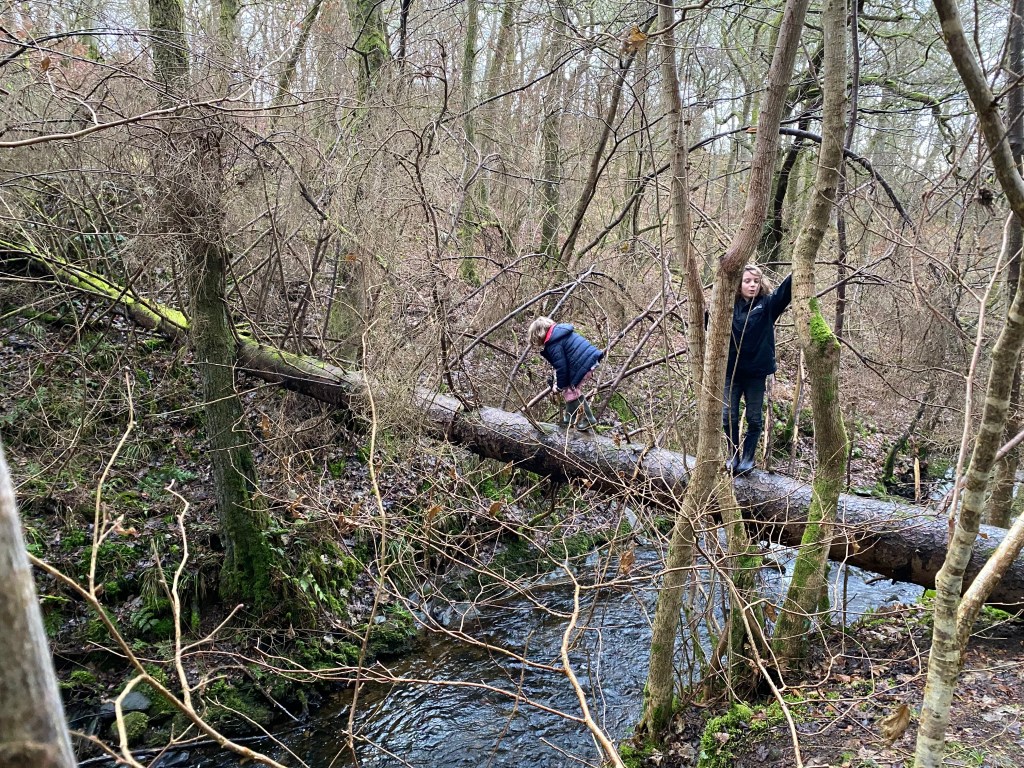
Project based learning builds upon the foundation of experiential learning by following the pedagogy through to the level of what is being taught; where experiential learning forms the basis of a holistic view of learning where learners and learning are not seen as discreet, a project-based approach is the foundation of embedding this across the breadth of learners’ experience. By learning through projects, the pedagogical view of a curriculum as discreet subject areas is broken down and subjects as well as contexts and learners can be viewed as holistic. It is, after all an impossible task to relate a discrete subject to a truly experiential model of learning. Rohm et. al. (2021) suggest that project–based learning can support the development of the technical and meta-skills necessary for students to adapt to uncertainty and ambiguity and become future proof and real-world ready. By making education a microcosm of the world around learners, and where possible as integrated as possible with the world around them through community and business engagement, we prepare learners contextually for what their lives will involve. Where we isolate learners through discrete subjects out of context with real world application, how can we expect them to apply, problem solve and develop within a real word context? In a report by the World Economic Forum, the top 10 job skills for a 2025 workforce were detailed (see image), the trend for education and skillsets of individuals is project based, collaborative and experiential in nature; no longer based on prescriptive teaching of discrete content with a bias towards the academic. The categories contained within the World Economic Forum paper also correlate well with the foundational principles outlined at the start of the paper.
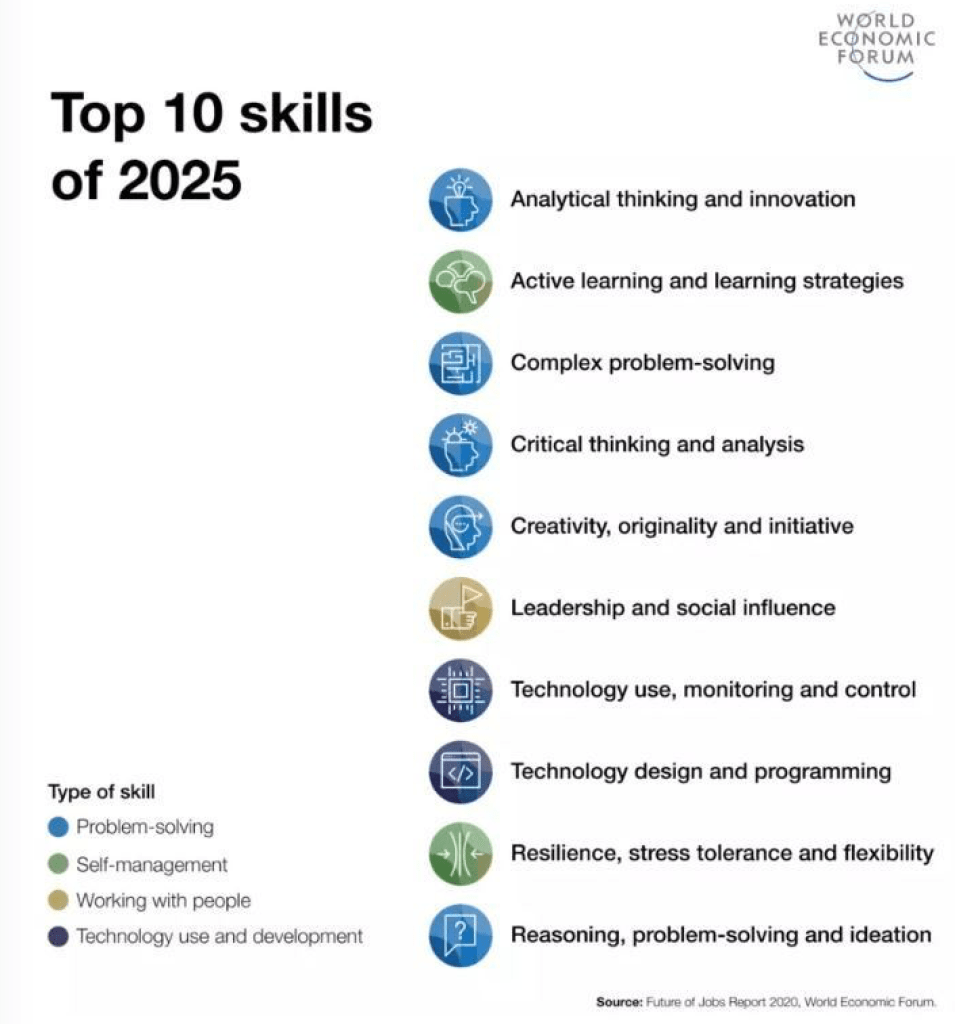
Source: Future of Jobs report 2020. World Economic Forum. https://www.weforum.org/agenda/2020/10/top-10-work-skills-of-tomorrow-how-long-it-takes-to-learn-them/
Project based learning does more than simply break down discrete elements of learning and support the foundations of experiential learning, it also develops the collaborative elements of learning and promotes the development of leadership. Project based learning develops a skillset in communication, collaboration, and compromise. It develops core competencies that go beyond the individual and allow the holistic nature of the educational paradigm to be extended beyond independence towards an interdependent mindset and skillset for learners. Iansiti and Roy (2004) highlight the importance of interdependence within the economic ecosystem, and Columbus et.al. (2021) outline the very large number (and relevance) of interdependent interactions within the social sphere and relationships. This is a key element of human interaction that needs to be explicitly related to how we educate; the link between education, work and society is foundational in all our lives and needs to be properly recognised (Blaga and Stefanescu 2016).
References:
Rohm, A., Stefl. M. and Ward, N. (2021) Future Proof and Real-World Ready: The Role of Live Project–Based Learning in Students’ Skill Development. Journal of Marketing Education. 43 (2), p204-215.
Iansiti, M., and Roy L. (2004) The Keystone Advantage: What the New Dynamics of Business Ecosystems Mean for Strategy, Innovation, and Sustainability. Boston: Harvard Business School Press
Columbus, S., Mohlo, C., Righetti, F. and Balliet, D. (2021) Interdependence and Cooperation in Daily Life. Journal of Personality & Social Psychology. 120 (3), p626-650.
Blaga, C. and Stefanescu, F. (2016) WORK, EDUCATION, SOCIETY. INTERDEPENDENCE AND COMPLEMENTARITY. Annals of the University of Oradea, Economic Science Series. 25 (2), p174-181.
 Shevek Pring